 Giga
The short answer
Plan the route before the equipment
When hoisting is the right answer, which photos to send, what it costs and how your home is protected. Giga prices sofa hoisting at £150 to £280.
- Hoisting helps when stairs, lifts or hallways are too narrow.
- We need photos of the window, the street and the sofa before we price it.
- Protecting your property is part of the method, not an extra.
- The price is firmest when access has been checked in advance.
When Sofa Hoisting Helps
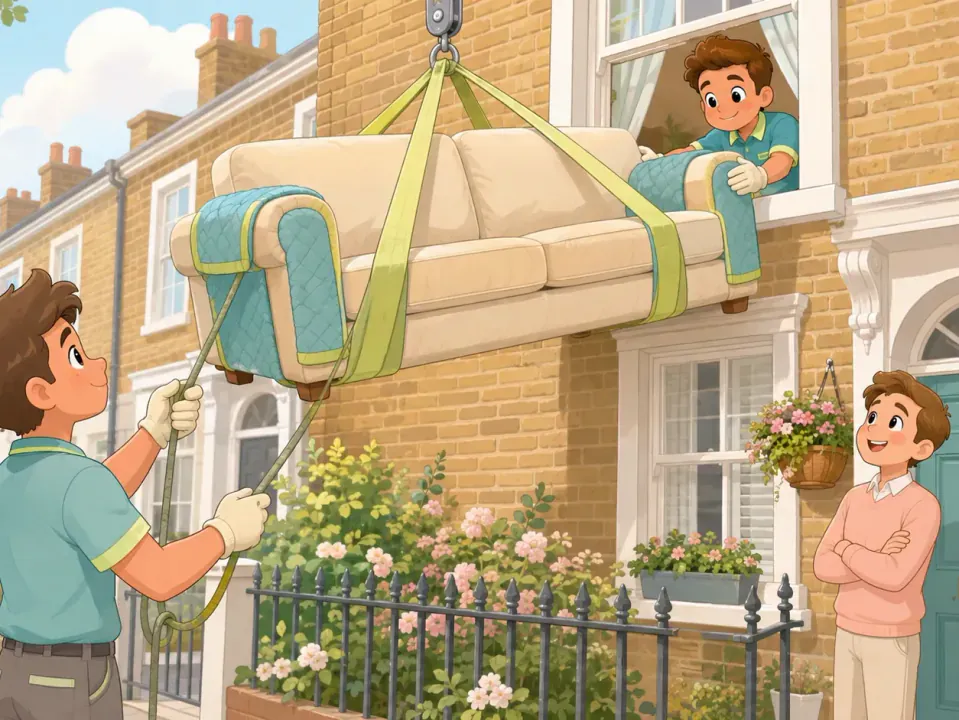
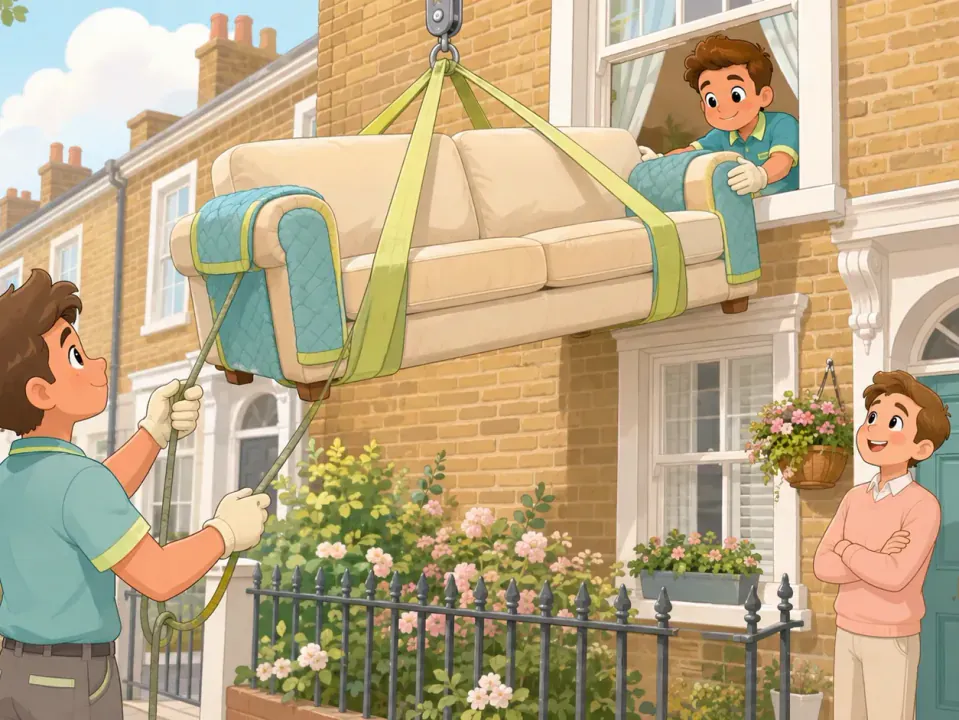
Hoisting is the answer when a sofa will not turn on the stairs, fit in the lift, pass along a narrow hallway or clear a tight front door.
It comes up often in converted flats, Victorian terraces, new-build apartments and upper floors, in London and in cities across the UK.
Photos to Send Before Booking
Send photos of the sofa, the window or balcony, the building from street level and anything in the way, such as railings, trees or parked cars.
From these we confirm the equipment, crew size, time and price.
Related reading: Sofa Hoisting London: Safe Access, Costs & Planning Guide and Sofa Delivery London Cost Guide 2026.
How Property Protection Works
Window frames, walls, sills and the sofa itself are padded before the lift starts. The sofa is guided up slowly, never pulled.
We explain the plan before lifting and check the property with you once the sofa is in place.
Clear answers
Frequently asked questions
Often, yes, if the opening is wide enough, the street below gives safe working space and the sofa's size and weight suit the lift. Photos of the sofa, the window or balcony and the street usually show quickly whether it will work. If not, dismantling the sofa or another route may be the answer.
Sofa hoisting with Giga costs £150 to £280. A simple lift to a low floor with good street access sits at the lower end; bigger or heavier sofas, higher floors and harder access cost more. We confirm the price in writing once we have seen photos of the sofa, the window or balcony and the street below.
Yes, when trained movers do it with the right equipment: rated straps, proper padding, a controlled lift and a cordoned-off area below. The lift is planned in advance and stopped if the weather, such as strong wind, makes it unsafe. Never try a hoist yourself with ropes or improvised kit.