 Giga
The short answer
The tightest turn and the lowest ceiling decide what fits
Victorian, Georgian and Edwardian conversions in London often have narrow, winding stairs that stop large furniture. The fixes are careful measuring of the landing turns, taking doors off, splitting modular sofas, or using a window hoist to skip the stairs altogether.
- Diagonal pivot: Check the landing ceiling height against the sofa's length before you try the turn.
- Upholstery protection: Two layers of blankets protect the fabric and the paintwork.
- Doors off: Lifting a door off its hinges gains about 3-5cm.
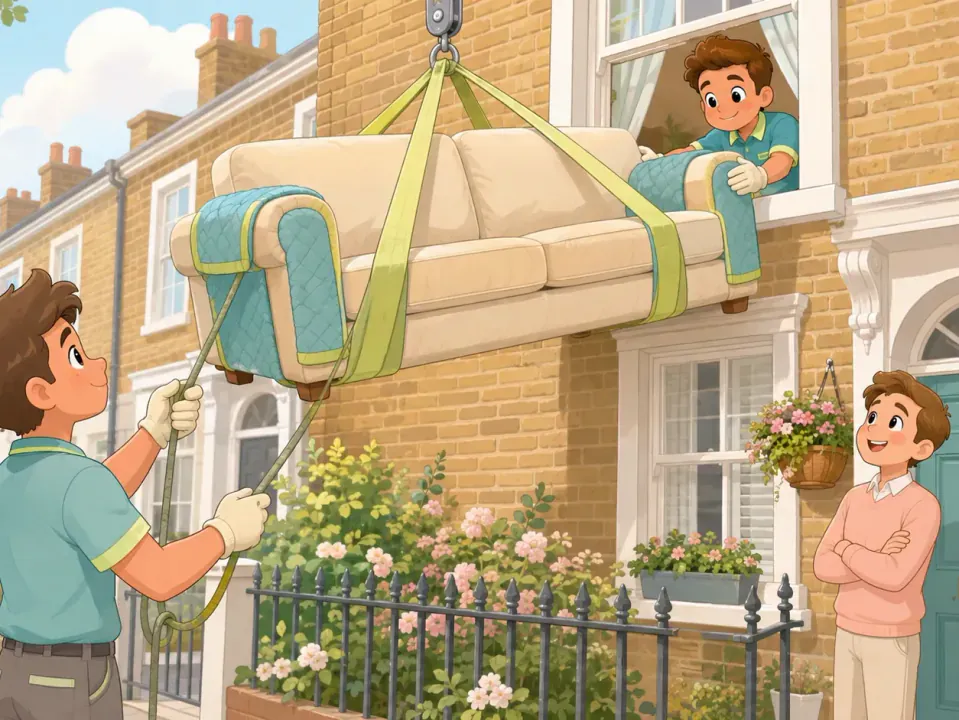
- Hoisting: A balcony or window hoist is the safest way round a staircase that won't work.
Calculating Diagonal Staircase Pivot Space
In London homes, furniture most often gets stuck on the half-landing of a winding staircase. People measure the width of the stairs but forget the diagonal space at the turn. To get a sofa round a 90 or 180-degree turn, it has to be tipped up on end.
If the landing ceiling is lower than the sofa is long, it will jam. To check, measure from the corner of the landing step to the lowest point of the ceiling above it. That diagonal must be larger than the sofa's height plus its depth.
Access Measuring Checklist
Measure these before the crew arrives:
- Door Width: The clear gap between the door frame sides, not just the door itself.
- Landing Ceiling Height: The lowest point of the ceiling at each turn.
- Hallway Pivot: Enough space at the end of the corridor to turn the sofa into the room.
- Window Sash Frame: If hoisting, the open window must be wider than the sofa is deep.
Staircase Layouts by Property Era
Each type of London home has its own access problems. Victorian conversions have narrow hallways and steep, winding stairs. Georgian houses often have grand entrances but narrow basement stairs. Modern blocks have wider stairs but can have tight corridors with sharp corners.
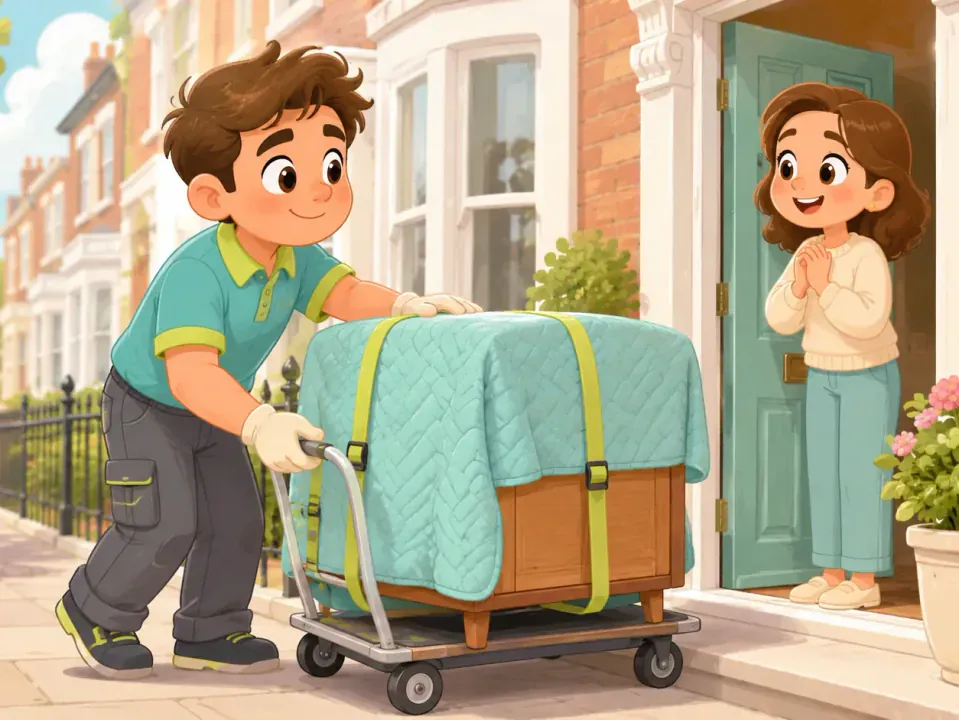
In period flats, we wrap the sofa in two layers of blankets. That protects the fabric from brickwork and the walls from scrapes. If the stairs are too tight, taking off the legs or arms often clears the turn.
Comparing Era access Challenges
Typical access limits by type of London property:
| Property Era | Typical Staircase Width | Primary Access Obstacle | Recommended Solution |
|---|---|---|---|
| Victorian Conversion | 70cm - 80cm | Tight 180-degree half-landings, low arches | Remove arms, or pivot to window hoisting |
| Georgian Townhouse | 80cm - 95cm | Steep cellar steps, narrow entrance halls | Remove window sash for direct ground lift |
| Modern Apartments | 100cm+ (wide) | Sharp L-turns in entrance corridors | Modular division of sectional components |
Related reading: How to Hoist a Sofa Through a Window or Balcony and Sofa Assembly & Dismantling Guide for Moving.
Sofa Hoisting: Bypassing the Staircase Completely
When the stairs won't work, we hoist the sofa outside the building. Load-rated webbing slings go round the frame and we lift it up to a window or balcony door. The staircase is skipped entirely, so nothing inside gets damaged. A Giga hoist costs £150–£280.
Moving into or out of a period flat? See our Sofa Hoisting page for hoist options, or our Sofa Delivery London page for transport and setup in the room you choose.
Clear answers
Frequently asked questions
Removing the actual door frame is a carpentry job and is rarely worth it. A simpler option is to unscrew the hinges and lift the door off, which usually adds around 3 to 5cm of clearance. That is often enough to slide a sofa through at an angle. If it still will not fit, the next options are dismantling the sofa or lifting it in through a window or balcony.
Measure the narrowest part of the stairwell and every turn. If the width is under about 75cm, or there are tight landings where the sofa cannot be stood on its end and turned, carrying it the normal way is usually blocked. Compare those measurements with the sofa's height, depth and diagonal. Email us photos of the stairs and landings and we will check access for you.